How Physical Therapy Teams Use PatientIQ to Strengthen Functional Recovery
Key Takeaways
-
Physical therapy outcomes rely on clear visibility into how patients feel and function throughout rehabilitation, not just during visits.
-
Patient-reported outcomes (PROs) give therapy teams a scalable way to measure recovery, adjust treatment plans, and demonstrate value to referrers and payers.
-
With EHR-integrated automation, PRO capture becomes consistent, accessible, and clinically useful.
Physical therapy programs are increasingly expected to show measurable functional improvement, reduce variation, and create a more connected patient experience. Yet fragmented documentation and inconsistent assessments often make it difficult to understand how patients are actually progressing.
To illustrate what a unified, PRO-enabled workflow can look like, the following scenario describes a typical use case involving a physical therapist, a referring surgeon, and a patient beginning rehabilitation.
*This example is for demonstration purposes only and does not reference real individuals.
A Unified Start to the Rehabilitation Journey
When a patient is referred for PT after a total knee arthroplasty (TKA), PatientIQ automatically enrolls them in the therapy PRO workflow as soon as the first visit is scheduled. Surveys are sent:
-
Before the first visit to capture baseline functional status
-
At every re-evaluation to support documentation and guide care
-
At discharge to measure overall therapy success
If both the surgeon and the physical therapist use PatientIQ, the patient is never double surveyed and all providers can access the same information. This creates a shared, consistent picture of recovery across surgery and rehabilitation.
For readers less familiar with PROs, this overview explains what they are and why they matter in patient centered recovery.
How PT Became a Champion for PRO Adoption
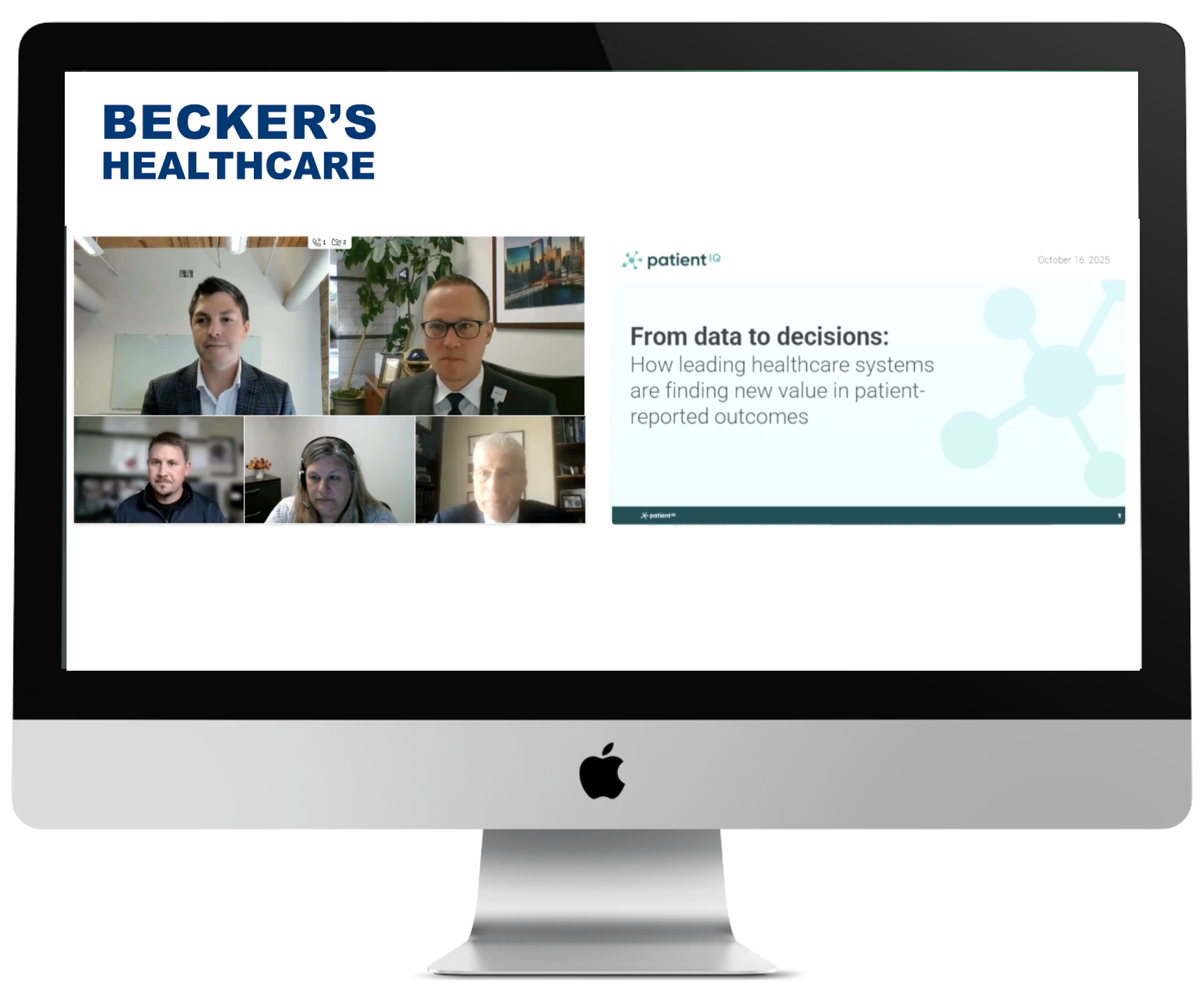
From our webinar with Becker’s Healthcare, Joe Kucksdorf from Emplify Health explained the system-level perspective:
Physical therapists have been early champions of PROs in clinical care. Their use of functional outcomes often shows other departments how PROs can strengthen patient conversations and guide more targeted treatment planning.
Clinical Insight Directly in the Therapist’s Workflow
Using PatientIQ, the physical therapist can review postoperative PROs and new PT baseline scores directly inside the EHR. This gives a complete view of pain, mobility limitations, and functional goals before the first visit.
Patients receive surveys through mobile friendly, multilingual, no login links. If a patient forgets to complete a task, automated reminders support high compliance without staff involvement. Practices can also enable in office kiosks to make capture easy at check in.
Adjusting Therapy Based on Real Time PRO Signals
Let’s say a patient received a TKA and is prescribed physical therapy following their procedure. Six weeks into rehabilitation, the physical therapist reviews the patient’s updated PRO scores. Recovery AI Insights highlight progress in pain reduction and mobility, but reveal continued difficulty navigating stairs. With this information available immediately, the therapist adjusts the treatment plan to focus on strength and functional training specific to stair climbing.
This is where PROs become most valuable, because they provide continuous patient insight that informs personalized care.
Closing the Loop With Referring Providers
In this scenario, the patient’s surgeon also uses PatientIQ for PRO collection. This enables the surgeon to view the patient’s PT progress in real time, which helps improve communication, streamline follow up decisions, and strengthen referral relationships. For PT directors focused on referral stability and growth, this shared visibility is a key advantage.
On the operational side, therapy leaders can also review population level PRO trends and compliance patterns through PatientIQ’s Performance Dashboard. This allows teams to understand how patients are progressing overall and identify where programs may need additional support.
Moving PT Programs Toward Predictable, Patient Centered Recovery
By embedding PROs throughout rehabilitation, PT programs can deliver more efficient operations and more proactive clinical care. PatientIQ helps therapy teams:
-
Track outcomes in real-time and personalize therapy
-
Strengthen collaboration with referring providers
-
Demonstrate measurable improvements in function and mobility
-
Scale a unified measurement strategy across PT, OT, and broader rehab services
If your rehabilitation program is ready to elevate its outcomes strategy, PatientIQ provides the workflows, automation, and analytics needed to support consistent measurement from end to end.


.png)