As patient-reported outcomes (PROs) become more deeply embedded in healthcare, the conversation is shifting once again. Health systems have made the case for outcomes measurement and are learning how to operationalize PROs at scale. Now, leaders are looking ahead to what comes next.
That question anchored the final discussion topic in PatientIQ’s Becker’s Healthcare webinar, From Data to Decisions. Panelists explored how PROs are evolving from retrospective reporting tools into drivers of quality improvement, personalization, and continuous learning across the healthcare system.
The future, they agreed, will not be shaped by a single technology or mandate. It will depend on better data, durable regulation, smarter infrastructure, and cultural adoption.
Better Data Enables Better Insight
For Dr. Steven Glassman, Medical Director at Norton Leatherman Spine, the future of PROs begins with data maturity.
Healthcare already has access to massive datasets through sources like Medicare. What those databases often lack, however, is clinical context. Registries offer a different opportunity. By pairing PROs with more granular information, including the intent behind surgical decisions, registries can move beyond trend analysis and begin driving meaningful quality improvement.
In complex specialties like spine care, diagnosis codes alone do not tell the full story. Understanding why a procedure was performed and how patients experience outcomes afterward creates a richer dataset, one that can be used at scale to inform care delivery, research, and national improvement initiatives.
PROs Are Expanding, Not Disappearing
While innovation often focuses on what's new, Deneen Ochab, Director of Quality and Patient Safety at Northwestern Medicine, grounded the future of PROs in a more pragmatic reality: regulation is not going away.
Drawing on decades of experience in quality leadership, Ochab emphasized that PRO programs will continue to expand across care settings. Rather than treating PRO-PM programs as measures to chase, she stressed the importance of using them to drive decision-making and elevate the patient’s voice in care.
As CMS continues to evolve its performance measures, including expansion into outpatient and additional procedural areas, health systems that view PROs as temporary compliance work risk falling behind. Those that invest early in sustainable programs will be better positioned as expectations grow.
A More Continuous, Patient-Centered Experience
From an innovation standpoint, Justin Brueck, System Vice President of Innovation and Research at Endeavor Health, described how PROs can fundamentally change the patient experience.
Hospitals are designed to surround patients with care during an episode. Once patients leave, engagement often drops off. PROs help bridge that gap by creating ongoing feedback loops that reflect how patients are functioning in real time, not just during scheduled visits.
Brueck noted that PROs represent one of healthcare’s most underutilized sources of human context. When paired with digital tools and analytics, outcomes data can support more personalized care plans, faster intervention when patients go off track, and a stronger sense of connection beyond the hospital walls.
"From the innovation standpoint, one of the things that me and my team and I focus a lot on is, what is the consumer of the future? The reality is, what AI is bringing forward is this opportunity for us to have hyper-personalized care plans. And with PROs, it's almost like this most underutilized data source that we can use to personalize care, right? You're actually getting real-time feedback about what's going on with that patient, and you have the ability to interface with them."
This approach enables a continuous learning model, where each patient’s experience helps inform care for the next. It also opens the door to using PROs not just as data, but as a living feedback mechanism to shape more adaptive and patient-centered systems of care.
Technology Alone Is Not Enough
Despite advances in analytics and AI, panelists were clear that the future of PROs still hinges on change management.
Joe Kucksdorf of Emplify Health emphasized that much of the necessary infrastructure already exists. The challenge is prioritization. While regulatory pressure can drive adoption from the top down, lasting change happens when clinicians themselves expect PRO data as part of care.
He shared an example of a physician who began using PROs not only after surgery, but before it, relying on outcomes data to help determine surgical candidacy. When access to that data was removed, the physician immediately asked for it back, noting it had become as valuable to decision-making as imaging.
That moment captures what the next phase of PRO adoption requires. When clinicians and patients both expect outcomes data to be present, PROs move from reporting exercises into routine clinical practice.
Toward a Continuous Learning Health System
Taken together, these perspectives point toward a broader shift. PROs are no longer just tools for measurement. They are becoming inputs into a continuous learning system, where patient feedback informs clinical decisions, quality improvement, and innovation at scale.
Every completed PRO has the potential to improve not only one patient’s care, but the care of the next patient as well. That is the promise driving the next phase of outcomes-based healthcare.
Listen to the Full Conversation
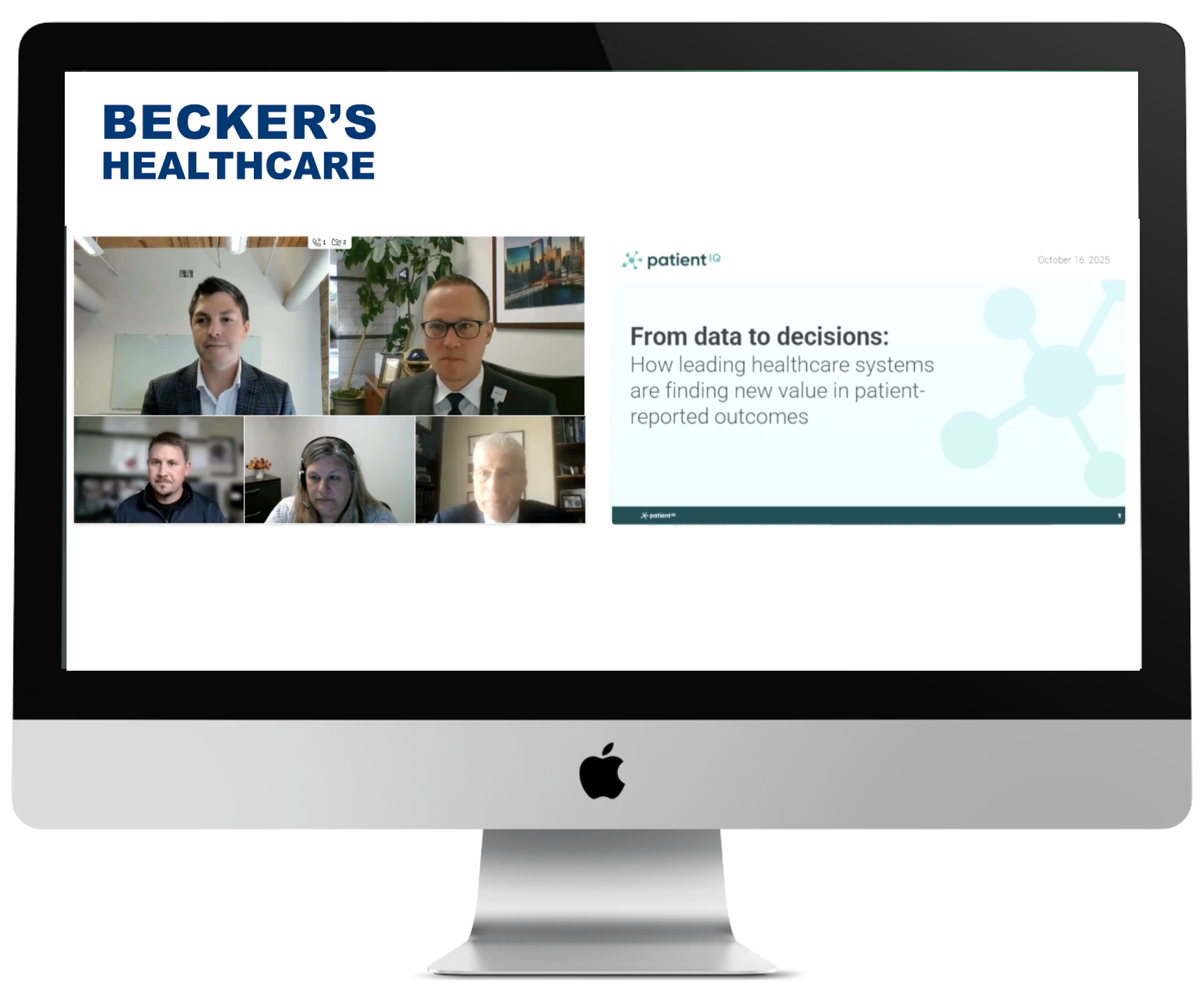
The future of patient-reported outcomes is already taking shape across leading health systems. To hear more from Dr. Glassman, Deneen Ochab, Justin Brueck, Joe Kucksdorf, and PatientIQ Founder and CEO, Matt Gitelis, listen to the full on-demand webinar, From Data to Decisions: How Leading Health Systems Are Finding New Value in Patient-Reported Outcomes.

.png)
.png)