After defining why patient-reported outcomes (PROs) matter and exploring the regulatory and cultural drivers behind their adoption, the next logical question for health systems is how to operationalize them at scale.
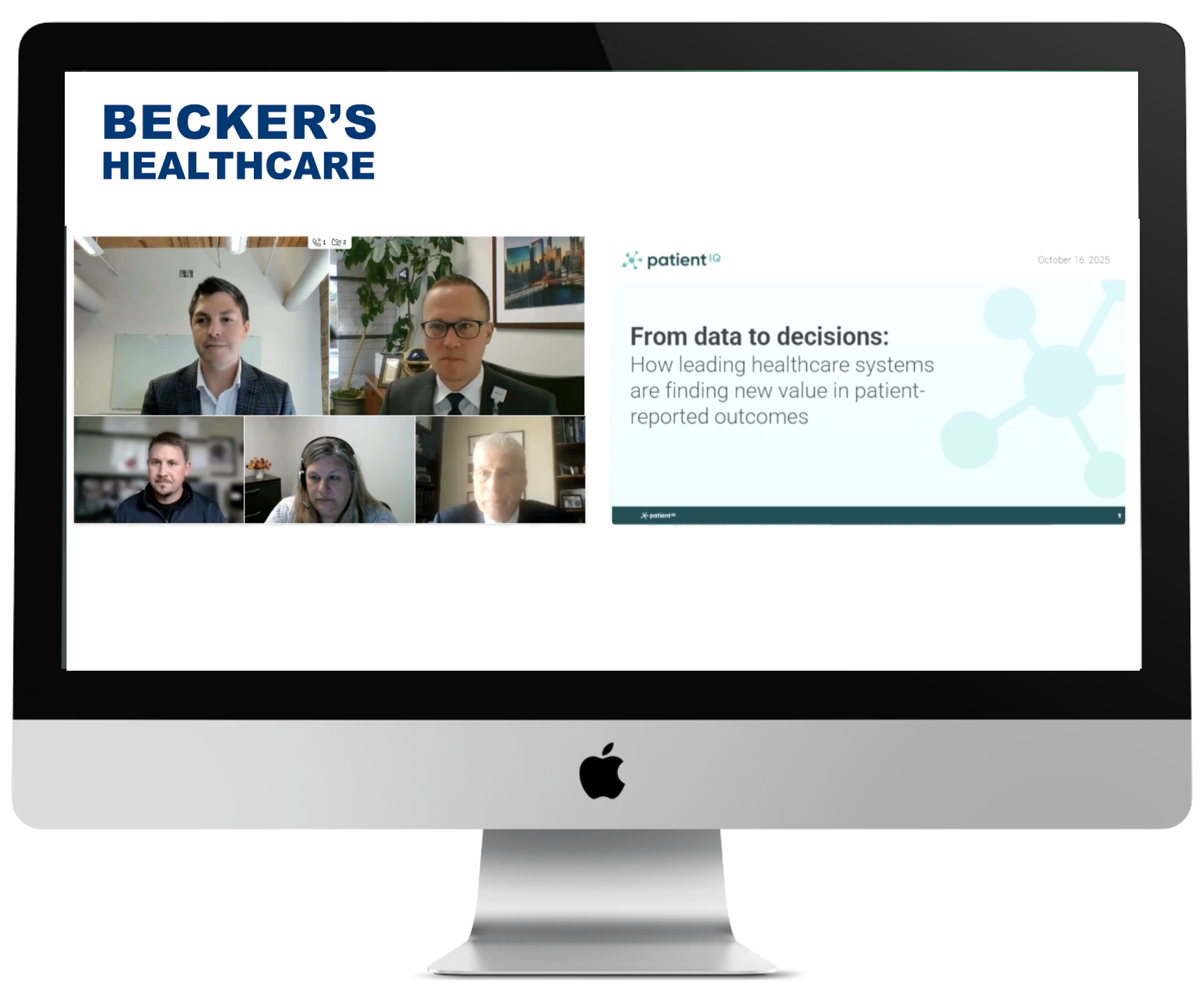
In PatientIQ’s Becker’s Healthcare webinar, leaders from across the country shared how they embedded PROs into workflows, engaged clinicians, and moved from pilot programs to enterprise-wide adoption. If you’re just joining the series, we began with an overview of the discussion from From Data to Decisions: How Leading Health Systems Are Finding New Value in Patient-Reported Outcomes, followed by a deeper look at the urgency behind PRO adoption in Making the Case for PROs: The New Value Equation.
This post focuses on what it actually takes to integrate PROs into clinical and operational practice.
Embed PRO Collection into Routine Clinical Workflows
One of the biggest barriers to PRO adoption is the perception that it is an add-on rather than an integrated part of care.
During the webinar, Deneen Ochab, Director of Quality and Patient Safety at Northwestern Medicine, described how the system embedded PRO collection into existing patient touchpoints such as check-ins, pre-visit questionnaires, and post-procedure follow-ups, instead of treating it as a separate task. By aligning PRO capture with workflows patients already expect, Northwestern Medicine was able to improve survey completion rates and normalize outcomes collection across the organization.
Automation also played a key role. Rather than relying on manual outreach or staff reminders, PROs were delivered through patient portals and care management tools, making completion part of the standard process.
Connect PRO Data to the People Who Use It
Operationalizing PROs means ensuring clinicians can see and use the data in meaningful ways. When outcomes information is accessible and relevant, it shifts from a reporting requirement to a clinical tool.
During the webinar, Joe Kucksdorf of Emplify Health described how clinician engagement grows when PROs are prioritized alongside other clinical data. While regulatory pressure can drive adoption from the top down, he emphasized that lasting change happens when physicians themselves begin to see the value.
In one example, a physician began using PROs before surgery to help determine whether a patient was a good candidate. When access to that data was removed, the physician immediately asked for it back, noting that it had become as essential to decision-making as imaging.
That moment reflects the shift many organizations experience. When clinicians expect PRO data as part of routine care, outcomes collection becomes embedded in daily practice rather than treated as a separate task.
Making Data Accessible at the Point of Care
Operationalizing PROs is not just about collecting surveys. It requires making outcomes data visible and actionable at the point of care.
Dr. Steven Glassman of the Norton Leatherman Spine explained how real-time access to PROs within the EMR allows clinicians to review patient-reported outcomes alongside other information discussed during the visit, ensuring the data influences clinical practice rather than living in a separate report.
This visibility also supports shared decision-making, enabling more transparent conversations with patients about recovery trajectories and expectations.
Foster Shared Ownership from Across Teams
Scaling PROs successfully requires more than a single department driving the effort. Quality, IT, clinical leadership, and frontline care teams all play a role.
Across organizations, leaders emphasized that sustained success depends on shared ownership. PRO programs are most effective when stakeholders across the system see their value in daily work.
Operationalization Is a Journey, Not a Destination
Achieving consistent, high-quality PRO collection and utilization takes time. It requires thoughtful workflow integration, accessible data at the point of care, clinician engagement, and organizational alignment.
Health systems that succeed do not just collect PROs. They use them to inform decisions, shape care plans, and improve outcomes.
For a deeper look at how leading organizations are navigating this journey, listen to the full on-demand webinar.

.png)
.png)